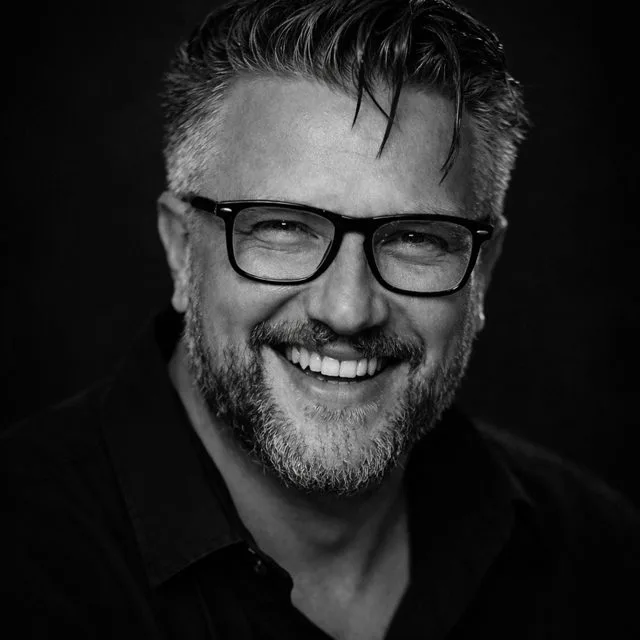
I help public institutions, local governments and the boards of municipal and private companies make decisions about IT, vendors and projects — standing on the client’s side. I don’t sell software and I don’t replace your IT department.
- Management and technology experience
- Over 20 years running analyses, gathering requirements, delivering implementations and managing service relationships directly with boards, CFOs and IT directors.
- Knowledge of local government, municipal companies and business
- Work with local governments, water utilities, district-heating companies, public-transport operators, the energy sector, manufacturing firms, container terminals, logistics companies, residential developers, banks and insurance companies.
- Turning business goals into technology, risk and final decisions
- Risk registers, three-year investment roadmaps and requirements documentation against which contracts and public registers are accepted. Real support for decision-making.
What I bring to a project. So digitalisation is simpler and cheaper.
My goal is to make IT projects, and the digitalisation that is essential today, easier and simpler to achieve, and less costly.
- 20 years of project experiencerequirements, rollouts and service relationships handled directly with boards
- Knowledge of the market and available solutionswhat is available, what fits with what, and what is realistic to ask for
- Design thinkingI start from people, the problem and the goal, not from a ready-made system
- Structured problem-solvingI put questions, definitions and decisions in order before any purchasing decisions are made
- 126 conference talksin Poland, the United States and Ireland: information management, collaboration, e-commerce, architecture, integration, user experience, conferences for local governments
- Understanding vendors’ intentions and problemsI know what a project looks like from the other side of the table, and I use that on the client’s side
The IBM method I use in workshops with the board. Before anyone asks which system to buy, we establish who the problem really affects, what the goal is and how we will recognise success. We turn departments’ differing expectations into a single list of priorities, and test the concept on a sketch or a prototype before the project starts costing money. The board gets a named problem and a solution it can evaluate — not a ready-made system looking for a use case.
This helps avoid the kind of failures that swallow hundreds of thousands, sometimes millions, of złoty — in projects that could have been approached a little differently from the start.
On the client’s side. In the board’s language, not technology jargon.
Five roles in which boards draw on my work. Each can be commissioned separately; details on the Services page
- Supporting boards through decisionsI understand the goals and concerns a board faces and guide it through the subject of digitalisation so it can have a meaningful conversation with its own IT team — not just accept ready-made recommendations.
- The client’s representative to vendorsI prepare vendor questions, a purchasing matrix to compare offers, and interoperability criteria for an informed decision — and for the audit that follows later.
- Prototyping intent: 15 minutes, a concept in ~2 daysA board can describe a problem in fifteen minutes, but has no time to write down requirements. I do — and I come back with a concept or a prototype before the project has incurred its first cost.
- The board’s representative on the delivery teamOnce a project is under way, I keep it aligned with the original intent in the day-to-day meetings — the board only returns to the topic when a decision is genuinely needed.
- Planning AI in the organisationAI doesn’t ask for permission – it’s turning the business models we know upside down. Today, every company is becoming a technology company, regardless of industry. Sales, marketing, operations, customer service, routine desk work: within a few years, the lion’s share of this work will be done by artificial intelligence. Adapting to this change is no longer an ambition or a trend. It is the only way to remain competitive.
Over 20 years of projects, from the first collaboration platforms to successive waves of regulation.
I name clients once they have given their consent. Until then, I describe the organisations in general terms.
- 2023–2026A software house and integrator
Building a B2B marketplace for the veterinary industry. Designing merchant-onboarding processes under the constraints of a restricted-distribution market. Designing a product-category taxonomy that brings together offers from many suppliers. Analysis and interface concept for purchasing analytics for companies and purchasing groups buying through the platform.
Board’s objective: Digitising a fragmented supply chain and bringing the platform to market faster. A single, overarching product categorisation that works however many merchants join the platform, while staying easy for buyers to navigate.
Benefits: Legally sound onboarding of suppliers in a regulated industry. Buyers get everything in one place: not only tools that streamline their purchasing processes, but also tools to analyse what they buy, when, at what price and from whom.
- 2019–2026Public utility companies: district heating, water utilities, public transport
Design, implementation and launch of a collaboration and business process management platform covering, among other things, a digital archive of procurement proceedings, digital workflow for cost documents, digital personnel files, correspondence management and legal assistance.
Board’s objective: An end to information silos and paper, with uniform procedures across the municipal companies.
Benefits: Faster approval of cost invoices, digital personnel files compliant with the GDPR and the Polish Labour Code, transparent oversight of tender proceedings, and quicker contract review by the legal department.
- 2018–2026A container terminal
A multilingual system for handling business partners, built on a process platform: registration, enquiries, offers and complaints — still in use today. Identifying objectives, requirements analysis and concept design for a stakeholder-relationship-management system.
Board’s objective: Continuous, transparent service for the terminal’s international business partners.
Benefits: Faster handling of enquiries and complaints, service in several languages without barriers, a full history of every request, and a lasting standard of customer service — the system is still running today.
- 2018–2026An international logistics company
Rollout and integration of a process-management platform, together with the design and implementation of a procure-to-pay process architecture integrated with ERP and the domain systems handling transport orders.
Board’s objective: Consistent financial and operational data, and automated settlement of transport orders.
Benefits: Less manual re-keying of data and fewer errors, automatic matching of invoices to orders and goods receipts (3-way matching), control over liabilities, and faster period-end closing.
- 2017–2026An industrial subsidiary of a foreign group
Concept design and implementation of a complete procure-to-pay solution for an international industrial corporation operating in Poland. Acting as change-management lead towards the board, the CFO and the chief accountant. Now in the ninth year of developing a BPM (business process management) system. Further expansions covered processes such as complaints, contracts and annexes, issuing samples, warehouse discrepancies, quality management, powers of attorney, change-approval requests, correspondence management integrated with e-Doręczenia, and handling of payments and bank payment batches integrated with the banking system.
Board’s objective: A single digital framework for financial control, board decisions and the plant’s operational processes.
Benefits: Tight control over spending and budget approvals, a documented audit trail of board decisions, payments through the bank integration without manual re-keying, which reduces the risk of fraud, and smooth adoption of new obligations such as e-Doręczenia.
- 2016–2026An international holding – bank, leasing, insurance
Rollout of a business process management platform, concept design and implementation of a procure-to-pay solution, business-travel handling, and integration with domain systems (OCR, KSeF). Adapting the solution to corporate purchasing procedures.
Board’s objective: Rigorous financial compliance and automated handling of overheads in a regulated sector.
Benefits: Processes that meet audit and compliance requirements, automatic settlement of business-travel expenses, readiness for KSeF, and less manual work in accounting thanks to OCR.
- 2008–2026Local government
18 years working with local governments on the strategy and architecture of a unified information-exchange platform that makes a genuine e-office possible. Over 40 modules designed and implemented, including EZD, e-archive, e-board, e-council, e-calls for applications, e-recruitment, public consultations, e-business-trips, e-training, councillor support, 12 public registers and two web portals.
Board’s objective: Moving the local authority from a paper-based model to an integrated e-office.
Benefits: Greater transparency of the authority and residents’ participation in consultations, shorter case-handling times, more efficient work of the executive board and the council (e-board, e-council), and compliance with electronic archiving and delivery requirements.
- 2012–2024An international holding – furniture and mattress manufacturing
A collaboration platform for over 1,500 users in a group of four companies on three continents — from purchase requisition to cost posting. Business and process analysis of a complete procure-to-pay system integrated with the ERP system.
Board’s objective: A single standard for purchasing and document workflow across an international group.
Benefits: An end to fragmented purchasing practices, board-level visibility of costs and cash flows across the whole group, consistent ERP integration regardless of where a factory is located, and a single working environment for over 1,500 users.
- 2008–2020A bus manufacturer
A consulting project: delivery of a process platform and a low-code environment on which the client’s own team built its own applications. A case study prepared together with the platform vendor.
Board’s objective: In-house digital capability and IT flexibility at a reasonable total cost.
Benefits: Less dependence on external software vendors: the client’s team builds its own business applications and rolls them out faster than in conventional projects.
- 2012–2017A research institute
Streamlining work, the flow of information, and the management of documents and business processes, including the rollout of a collaboration system, corporate e-mail and a set of business applications such as research-project management, resource and contract management, invoice and contract workflow, and domestic and international business travel.
Board’s objective: Orderly accounting for grant-funded and research projects, with less bureaucracy.
Benefits: Costs and business trips allocated to specific grants, which matters during funding audits, and timely delivery of research projects.
- 2007–2017An automotive-parts manufacturer
Analysis and rollout of a system for managing resources and administrative processes.
Board’s objective: Support processes that meet the automotive industry’s quality requirements.
Benefits: Transparent use of resources, fewer administrative hold-ups, and readiness for recurring industry audits.
- 2013–2014A nationwide radio station
Analysis and rollout of a dedicated CRM system.
Board’s objective: More efficient airtime sales and smoother relationships with media agencies.
Benefits: A shorter quoting cycle, an end to clashes in advertising-slot bookings, and up-to-date visibility of progress against sales targets.
- 2006–2014Credit unions
Supporting the board in putting administrative, financial and quality procedures and processes in order, including credit-scoring and lending processes. Rolling out collaboration systems and BPM platforms for processes such as loan and credit applications, generating credit-bureau reports, inspections of regional branches and head-office departments, business travel, invoices, ISO documentation and corrective-and-preventive-action management, organising audits, managing recruitment, competencies and training, changes to the organisational structure and workplaces, and the service desk.
Board’s objective: Growing the branch network while maintaining credit-risk discipline and meeting supervisory requirements.
Benefits: Faster lending decisions thanks to integration with the BIK credit bureau and scoring, central control over the branches, and efficiently conducted quality and supervisory audits.
- 2009–2013Manufacturing and installation of power-engineering equipment
Concept design and standardisation of contract-acquisition and investment-project-delivery procedures integrated with the company’s purchasing processes. Connecting the CRM system with the project-management system and procure-to-pay processes.
Board’s objective: Keeping control of profitability on long engineering and installation projects.
Benefits: Ongoing control of project margin: purchases of materials and subcontractor services are allocated to the budget of the specific contract won through the CRM.
- 2006–2013A Polish group of manufacturing companies
Concept and objectives design, and implementation of a collaboration platform for 800 users. Requirements and objectives, business and process analysis, and implementation of a process-driven CRM system connecting data across all companies in the group.
Board’s objective: Cooperation instead of rivalry between the group’s companies, and joint selling (cross-selling).
Benefits: A shared database of business partners for 800 users, an end to competing offers within the group, and a uniform commercial policy towards key accounts.
- 2008–2012A group of residential and office property developers
Concept and rollout strategy for a collaboration system, unified communications and a single set of business applications overseeing the group’s investment process: from acquiring building land, through the construction process, to automating financial and HR processes.
Board’s objective: A shorter investment cycle and full control over construction schedules and budgets.
Benefits: Early warning of delays and budget overruns, smoother circulation of design and construction documentation, and automated settlements with subcontractors.
- 2005–2012A gas-pipeline network operator
Analysis and delivery of an IT-resource-management system, an intranet and digital document workflow.
Board’s objective: Greater operational security for critical infrastructure and better internal communication.
Benefits: An accurate, audit-ready register of IT hardware and licences, secure circulation of sensitive documents, and faster access to operating procedures.
- 2007–2011A nationwide energy utility
Analysis and delivery of systems supporting tender management, purchasing policy, and the workflow between the group’s specialist units and branches and its legal department. Streamlining case handling in the board office.
Board’s objective: Transparent spending and legally sound board decisions.
Benefits: Lower risk of formal errors in tenders, faster contract review by lawyers, and orderly oversight of board resolutions.
- 2008–2010A nationwide pharmaceutical wholesaler
Identifying and mapping processes, rolling out a business-process-management platform, and delivering further modules automating selected processes and integrating with domain systems.
Board’s objective: Removing bottlenecks in high-volume, low-margin operations.
Benefits: Faster completion of administrative and warehouse tasks, a continuous flow of information between the warehouse and the office, and fewer human errors.
- 2006–2010A building-materials manufacturer
Analysis and rollout of a collaboration system and unified communications. Launching projects for service optimisation, contract management and a dedicated CRM system.
Board’s objective: B2B customer loyalty and faster handling of service requests on construction sites.
Benefits: Fewer unresolved complaints, faster response from service teams, and control over deadlines and annexes to distribution agreements.
- 2007–2008An alcohol distributor for the HoReCa sector
Design and rollout of a process-driven CRM system with loyalty-programme support.
Board’s objective: Loyalty of bars and restaurants, and repeatable order volumes.
Benefits: Automatic calculation of rewards and discounts, a programme encouraging venues to work on an exclusive basis, and up-to-date visibility of sales representatives’ performance.
- 2004–2008A building-materials manufacturer
A project supporting the debt-collection department: process analysis and rollout of the appropriate IT solutions.
Board’s objective: Protecting liquidity and shortening the time it takes to collect receivables (DSO).
Benefits: Automatic reminders and collection workflows, systematic detection of overdue payments, and fewer bad-debt write-offs.
- 2005–2007An international confectionery manufacturer
Analysis and design of a system for managing the lifecycle of ideas and observations, a project-management system, and a system for reporting production problems and tracking their resolution.
Board’s objective: Higher production-line efficiency and employee engagement in continuous improvement.
Benefits: Faster resolution of technical downtime and smooth implementation of cost-saving improvement ideas.
- 2005–2007A nationwide alcohol producer
Analysis and rollout of an access-management system integrated with SAP.
Board’s objective: Security of financial and production data, and segregation of duties (SoD).
Benefits: Lower risk of internal fraud, clear roles in SAP, and faster granting and revocation of access.
Let’s talk about the decision you are facing. First call: 30 minutes, no charge.
- I reply within 2 business days
- First call: 30 minutes, no charge
- Nothing to prepare beforehand